
C21 Contracting Corp builds tube-and-coupler scaffolding across all five boroughs. We have worked from the Bronx since 2004. Send us your address and we will tell you which scaffold fits your building and whether it needs a DOB permit.
a supported scaffold of steel tubes and couplers that wraps around your building.
A supported scaffold over 40 feet needs a DOB permit. Every sidewalk shed needs one.
Cornices, setbacks, bay windows, curved corners and fire escapes.
All five boroughs.
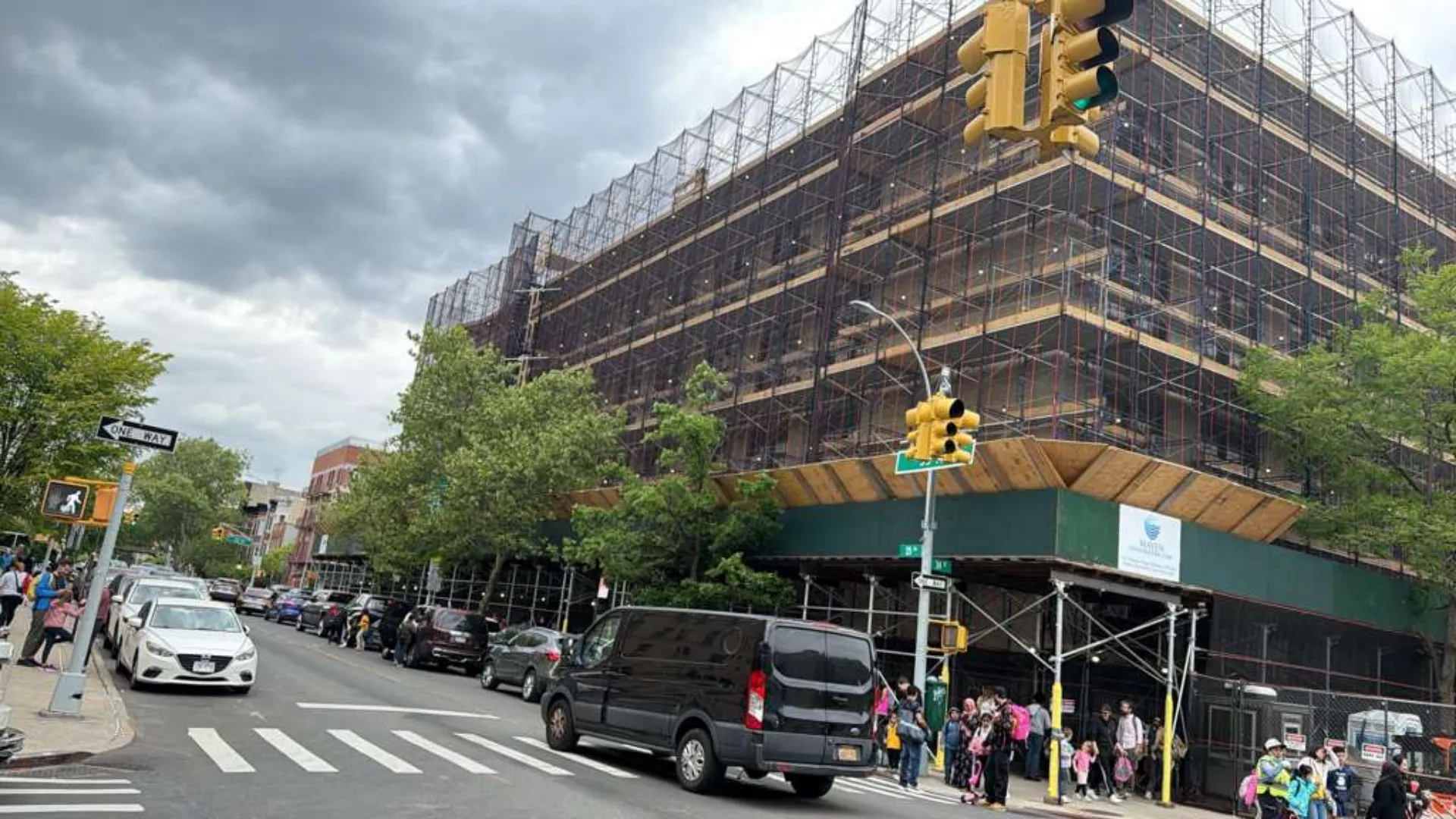
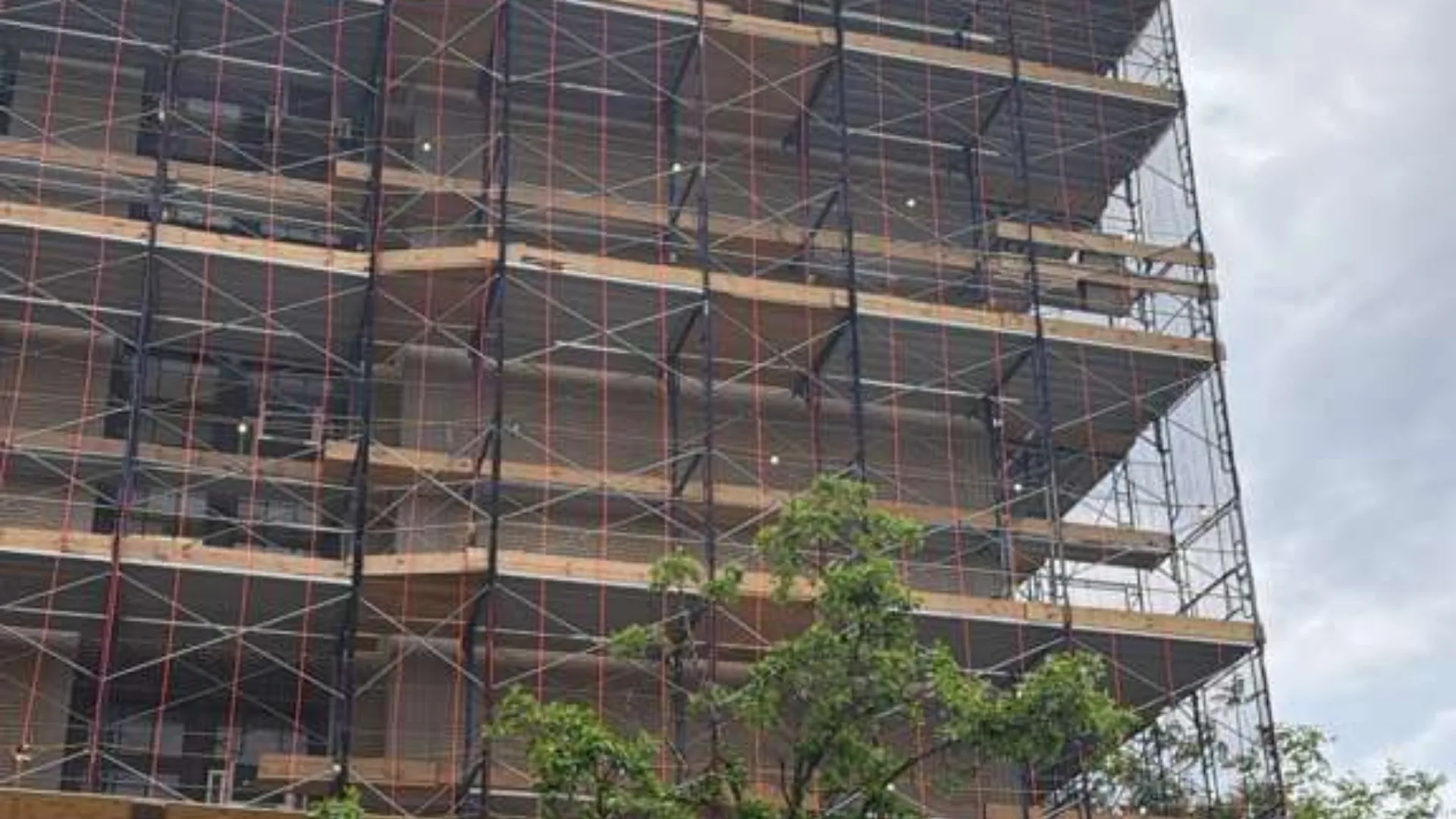
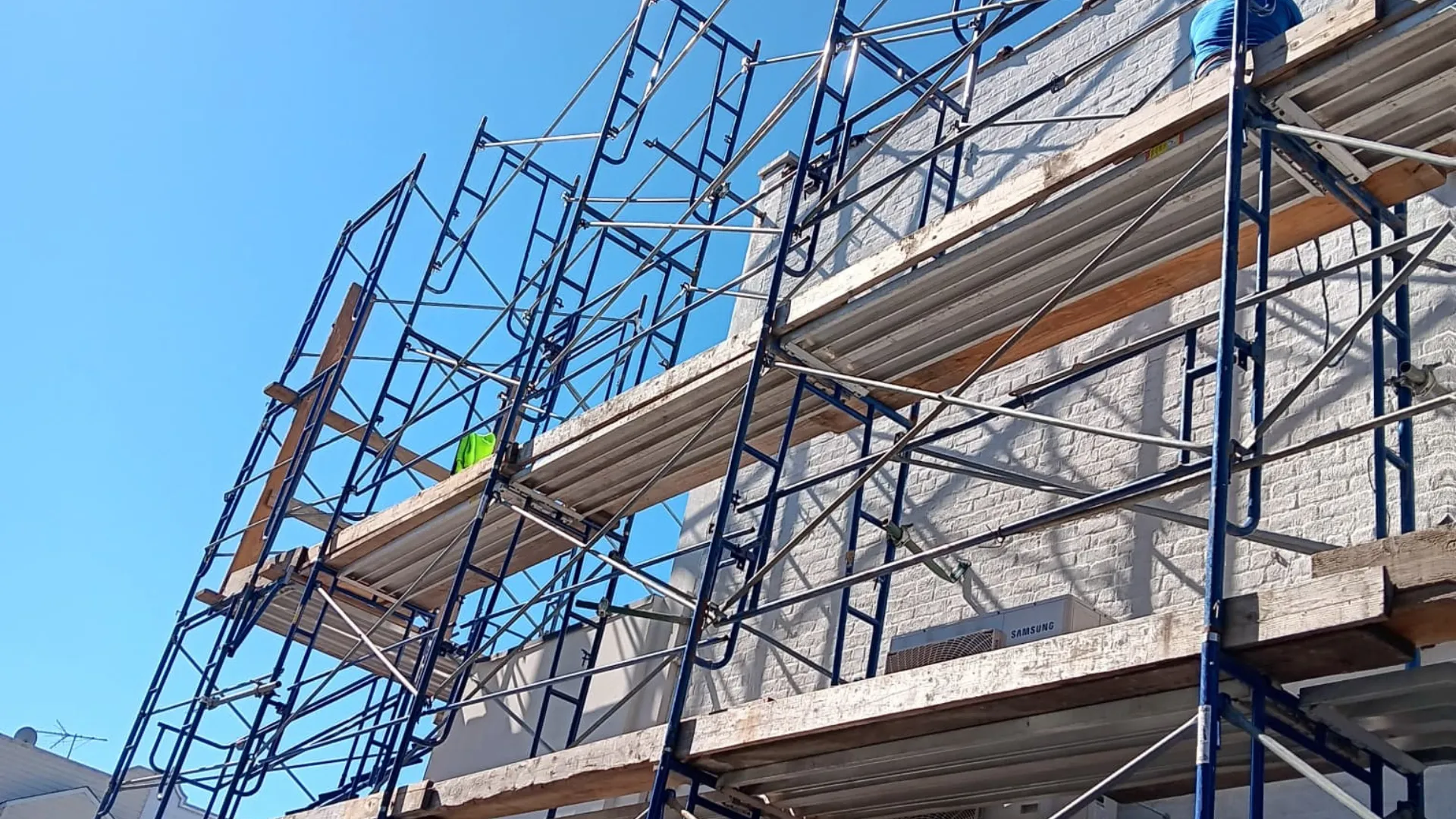
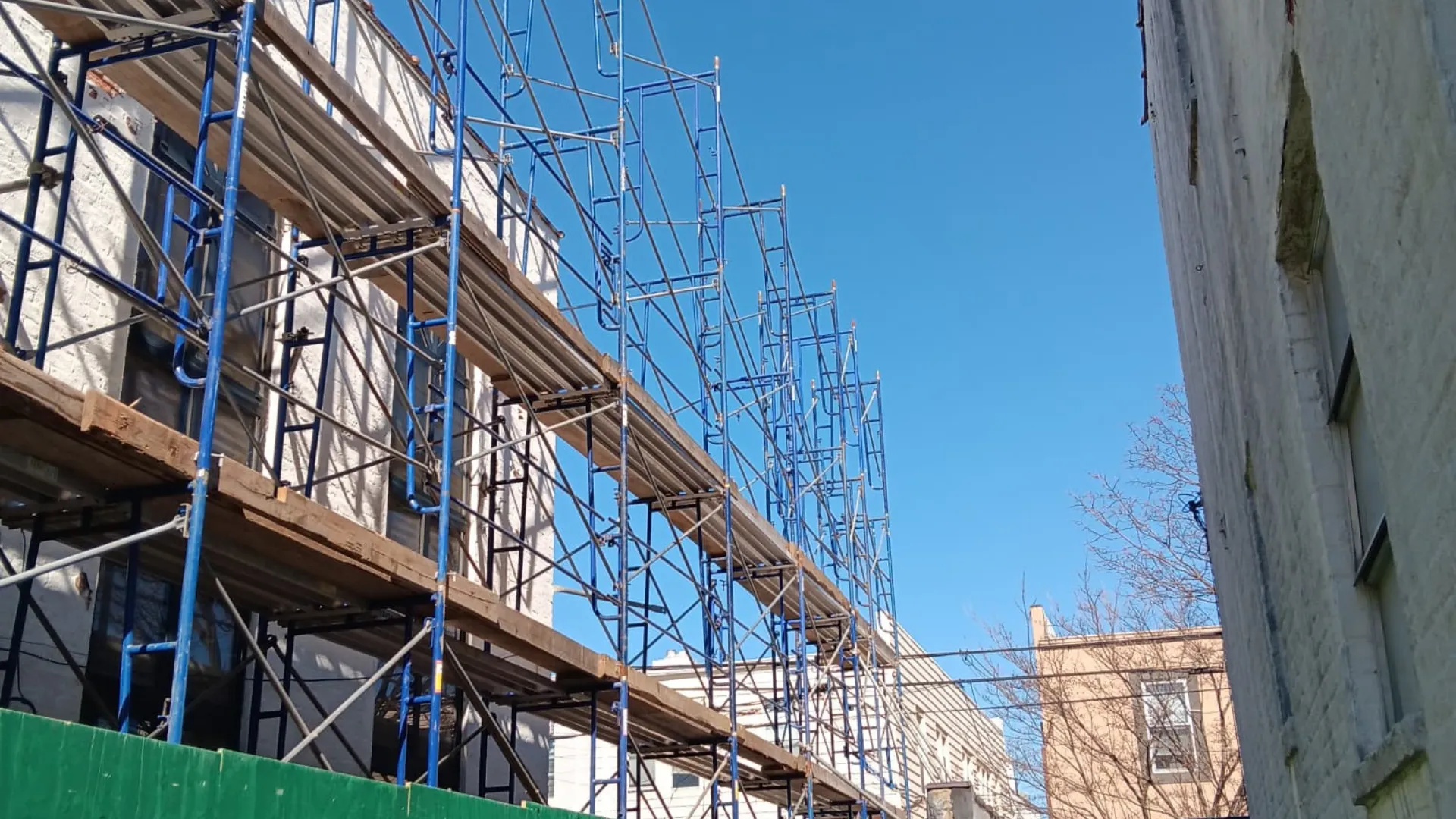
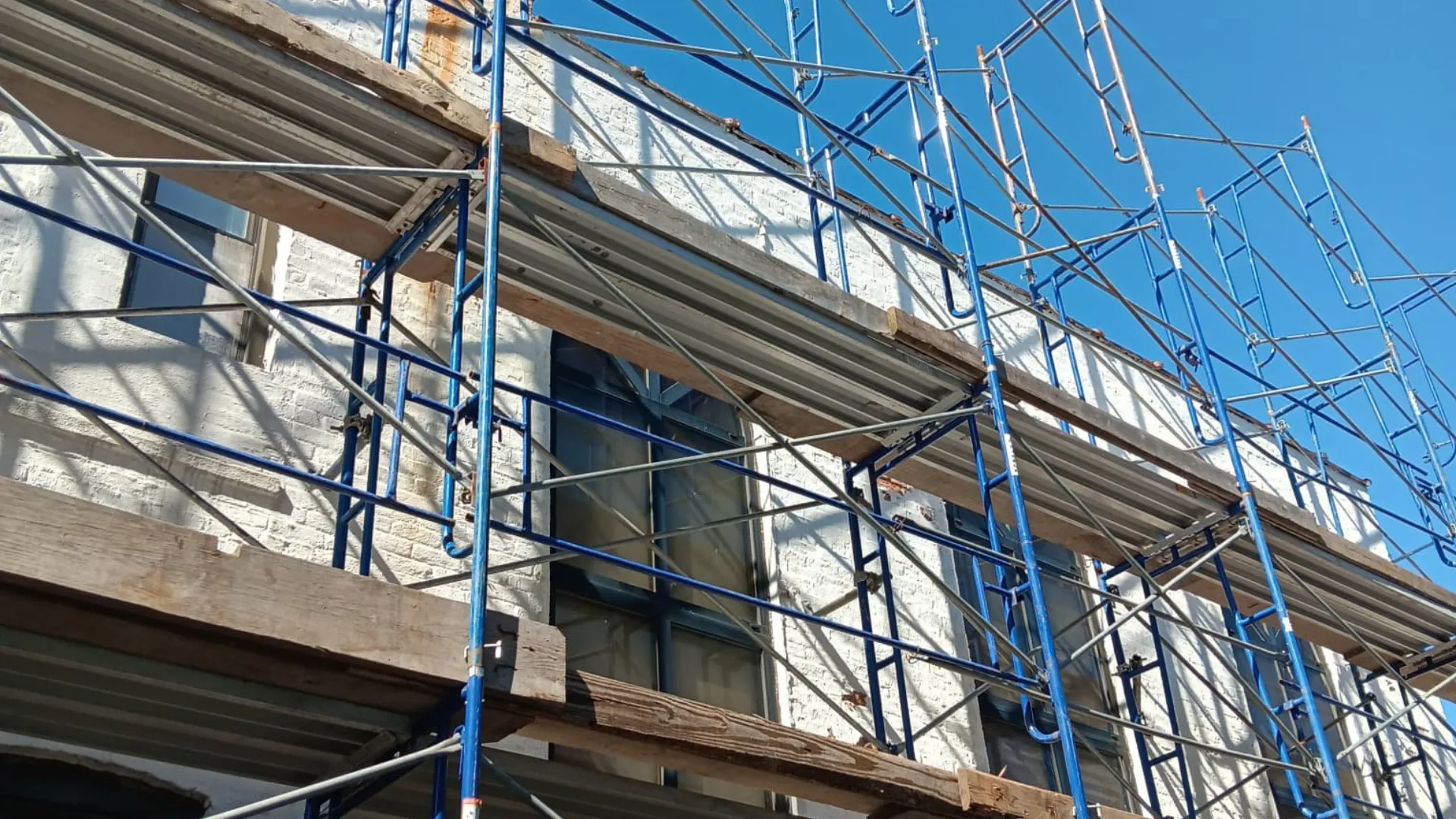
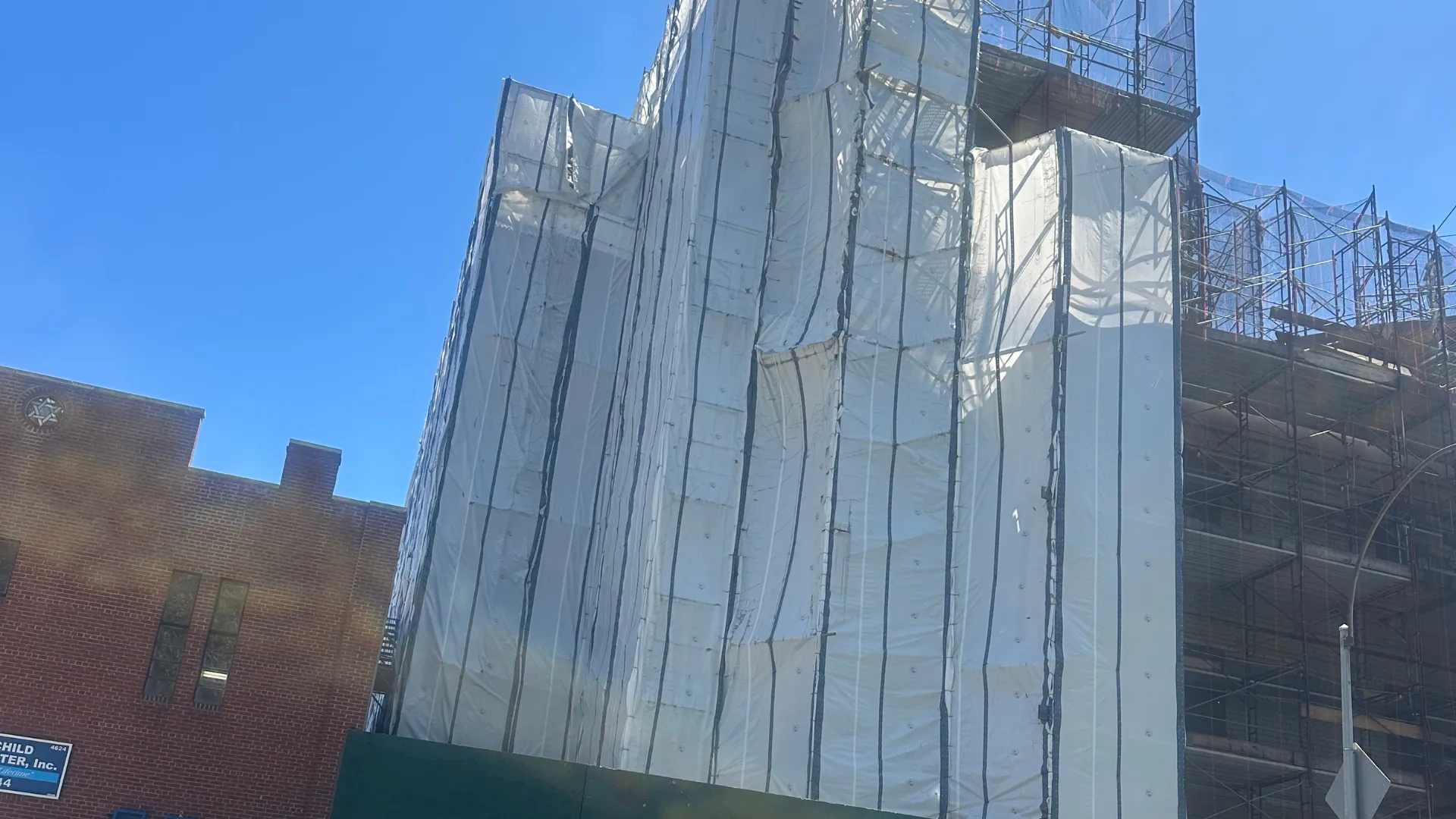
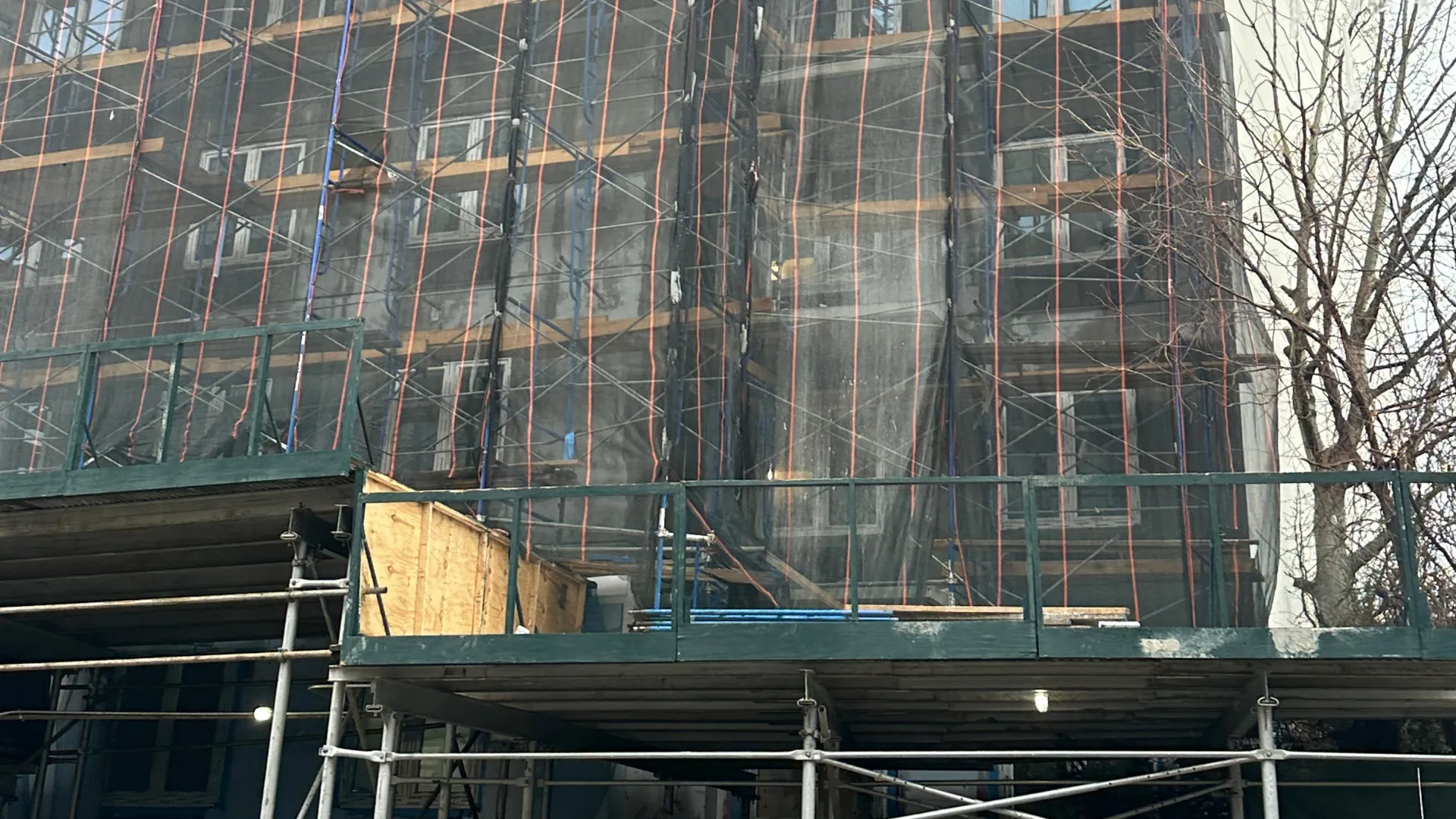
Pipe scaffolding is a supported scaffold. Contractors also call it tube and coupler scaffolding. Crews assemble it tube by tube, so the structure follows the building’s shape.
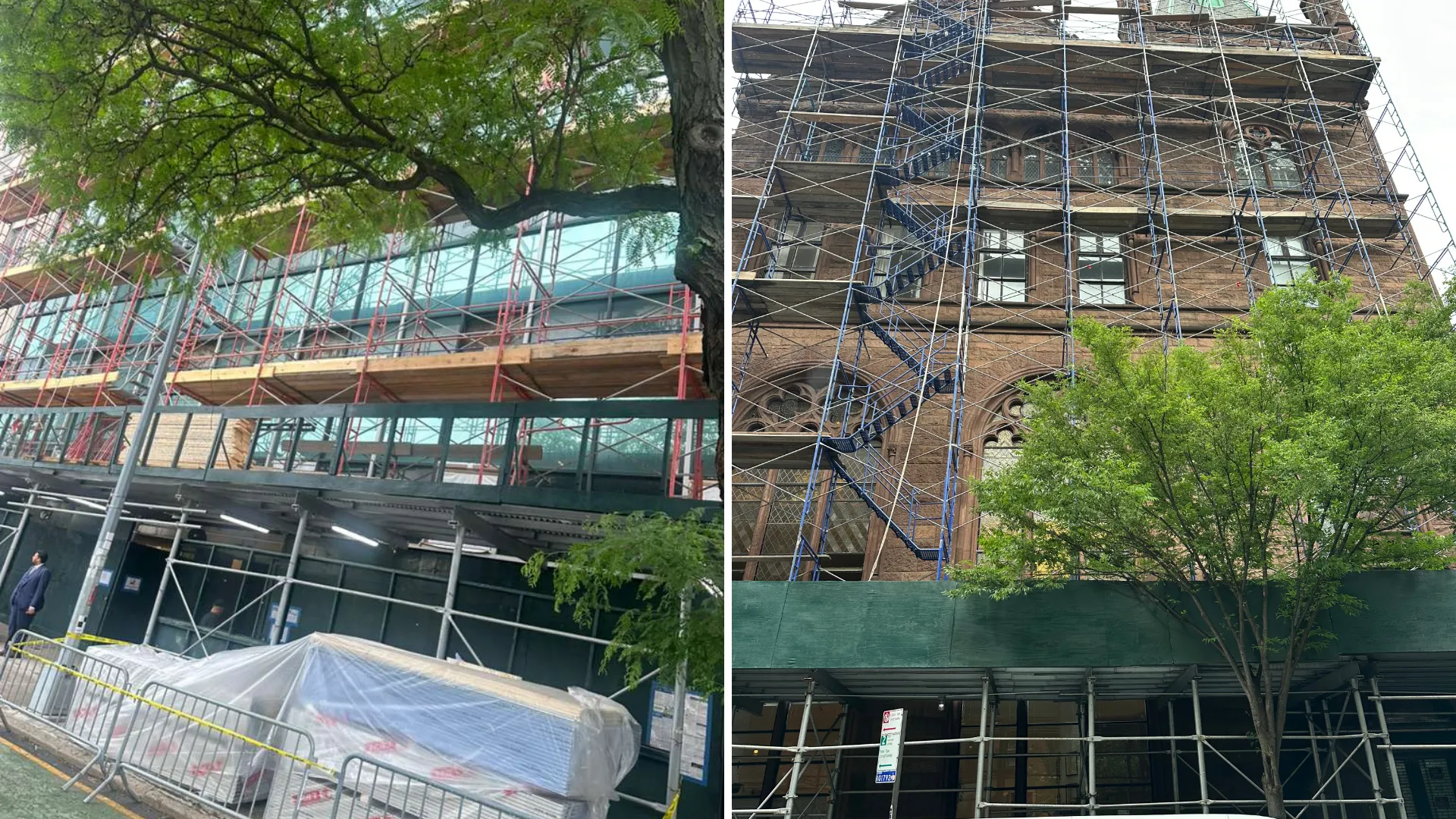
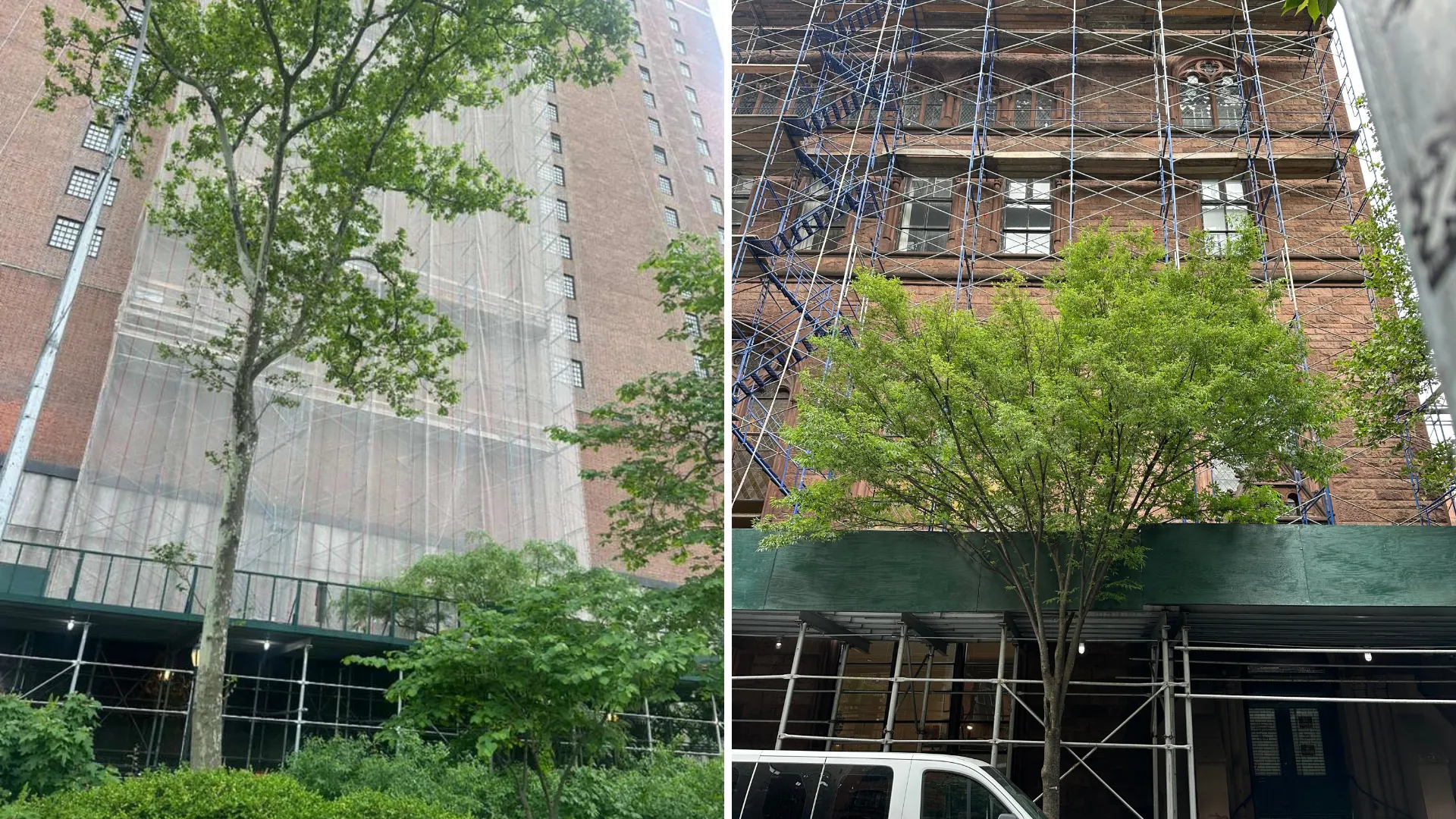
That matters in New York. In the Bronx, older brick buildings with projecting cornices, bay windows and exterior fire escapes can make scaffold layouts more complex. Cornices, setbacks, bay windows, curved corners and fire escapes break up the flat wall a standard frame needs. A tube-and-coupler layout can be configured around these features while providing a level working platform.
You usually see pipe specified when facade repair, pointing, brick restoration or roof access enters a bid. If your engineer or contractor specified pipe, this page explains what you are buying and what the DOB expects.
Each of them needs the same answer first: which system fits the facade, and what the DOB requires. Send us the address and we will answer both.
Most facade scaffolding in New York traces back to the Facade Inspection and Safety Program, known as FISP or Local Law 11. Owners of buildings higher than six stories must inspect exterior walls every five years and file a technical report with the DOB. A qualified engineer or architect inspects the facade. We do not inspect. We build the scaffold your repair scope calls for.
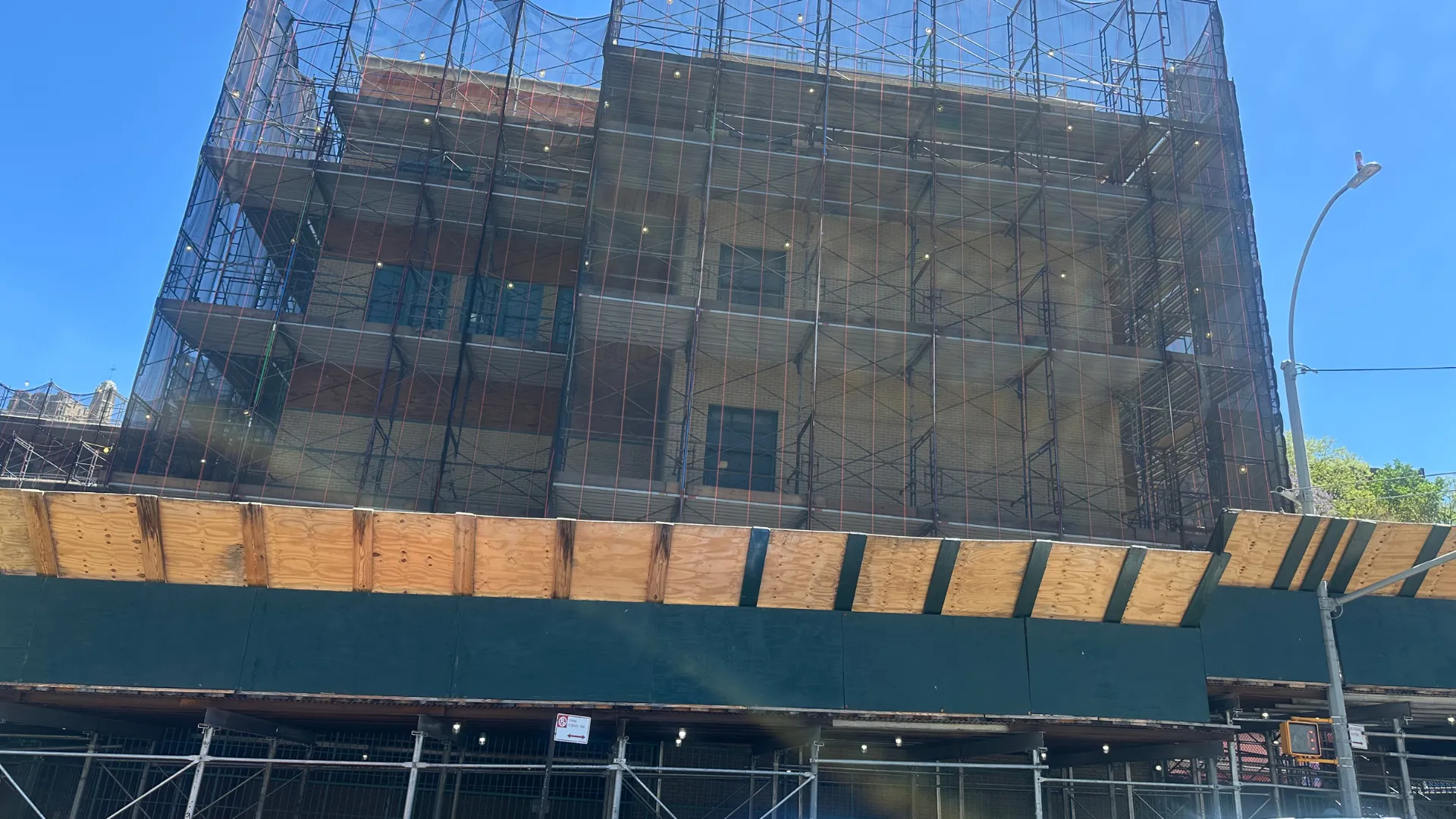
The inspector classifies each condition as Safe, Safe with a Repair and Maintenance Program (SWARMP), or Unsafe. For an unsafe condition, the owner must install protection, such as a sidewalk shed, immediately. Repairs follow, and crews need stable access to cornices, parapets, lintels and brick.
Pipe scaffolding suits that repair work when the facade has projections, setbacks or irregular lines. Century 21 also supplies the sidewalk shed, so one contractor covers the pedestrian protection and the working platform.
The DOB has proposed changes to FISP, so confirm your building’s cycle and deadlines on the DOB’s Facade Safety page. Under a FISP deadline? Call (347) 378-9978 or send us the address.
| Category | Pipe Scaffold | Frame Scaffold |
|---|---|---|
| Cornices and Bay Windows | Wraps around them | Needs clearance to pass them |
| Fire Escapes and Setbacks | Routes around them | Works when the layout allows |
| Curved Corners | Follows the curve | May need custom configuration |
| Setup Speed | Often slower, since crews build tube by tube | Often faster, with prefabricated frames |
| Cost on a Flat Wall | Often higher labor cost | Often lower |
| Best Fit | Complex facades and tight sites | Flat, uniform walls |
Cost and erection time depend on the site, the design and the access. Send us the address and we will recommend a system after we see the building.
Often, yes. A pipe scaffold is a supported scaffold. The DOB requires a permit before anyone erects any sidewalk shed, or a supported scaffold over 40 feet in height, and all filings go through DOB NOW: Build. A shed needs a permit at any height. Outrigger designs, heavy hoisting equipment and heavy loads can also change the answer, so we check each job at the site visit.
Height depends on what the scaffold stands on:
The DOB points to Building Code Chapter 33 (BC 3314.1.1) for the details. Read the rule on the DOB’s Scaffold & Shed Permit page. We cannot promise how the DOB will rule on an application, but we can tell you at the site visit whether your building triggers a filing.
Building over 40 feet? Tell us the height and we will walk you through the permit.
Four details let us quote fast:
Missing one? Send what you have and we will ask for the rest.
We walk the building, count the stories and mark obstructions. You receive a quote.
We confirm the filing and walk you through it.
Our crews build to the plan we agreed on at the site visit.
Call our Bronx office at (347) 378-9978 when something needs
We take the scaffold down when your work ends and leave the sidewalk and facade clear.
Four details let us quote fast:
Missing one? Send what you have and we will ask for the rest.
Facade work often needs a scaffold overhead and protection for pedestrians below. Century 21 supplies both, so one contractor handles the pair. See our sidewalk shed rental for the shed side of the job, or our scaffolding rental for longer projects. Jobs that need to hang from the roof instead can use our suspended scaffolding.
Designs vary by job. Most pipe scaffolds use these components:
OSHA sets load, spacing and height requirements in 29 CFR 1926.451, and the NYC Building Code adds its own. OSHA also publishes fact sheets on planning and design and erection and use.
We price each job after a site visit. Four things drive the number:
Send us the address and we will quote against your facade, not a generic rate.
Yes, when it stands over 40 feet. The DOB requires a permit before anyone erects a supported scaffold at that height, and a pipe scaffold counts as one. Sidewalk sheds need a permit at any height. You file through DOB NOW: Build, and we confirm at the site visit whether your building triggers a filing.
It depends on the facade. Pipe fits buildings with cornices, setbacks, bay windows, curved corners or fire escapes, because crews build it tube by tube around each feature. Frame suits flat, uniform walls and often goes up faster. We recommend one after we see the building.
Not always. Your engineer’s repair scope and the facade’s shape decide it. Pipe works well on facades with cornices, setbacks and bays. Send us the address and we will advise.
A supported scaffold stands on the ground, a shed or a roof. A suspended scaffold hangs from above. We build both, and a facade’s shape and access decide which fits.
It is another name for pipe scaffolding. Crews join steel tubes with couplers to build a frame that follows the building’s shape.
All five: the Bronx, Manhattan, Brooklyn, Queens and Staten Island. Our base is in the Bronx, and we walk the building before we quote any job.
Yes. We hold a DCWP Home Improvement Contractor license and carry $2M in general liability insurance. OSHA-trained crews run every job.
We quote each job after a site visit because four things set the price: building height, facade footprint, obstructions like cornices and bays, and how long the work runs. Send us the address and we will quote against your facade.
Send us the address, borough, building height in stories, the work you plan and your start date. We reply with a recommendation and a quote.